
November 04, 2026 | Blog, Facelift
7 minute read
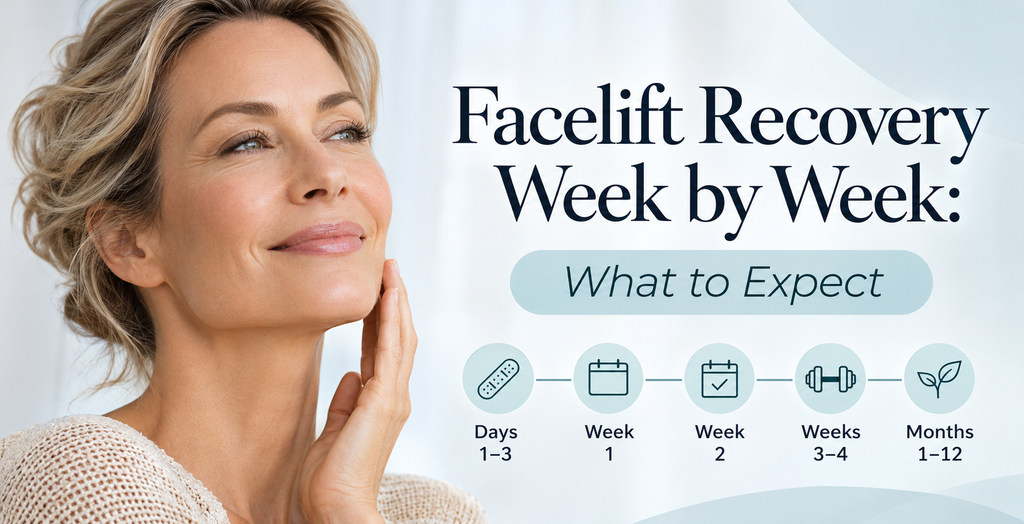
Most people recover from a facelift in stages: swelling and bruising peak in the first three days, most bruising fades by the end of week two, and many patients return to desk work and low-key social plans within two to three weeks. Residual swelling, numbness and tightness then settle gradually over three to twelve months. Everyone heals at a different pace, so your surgeon’s instructions always come first.
This guide walks through each stage of facelift recovery, what is typically normal at that point, and the signs that mean you should call your surgeon.
Facelift recovery timeline at a glance
| Stage | What is typical | What helps |
|---|---|---|
| Days 1–3 | Swelling and bruising build and usually peak; tightness, mild-to-moderate discomfort, a head dressing and possibly small drains | Rest with your head elevated, cold compresses if advised, prescribed medication, a trusted adult at home |
| Week 1 | Swelling and bruising begin to ease; drains and dressing usually removed; some sutures may come out around days 5–7 | Short walks around the house, gentle hygiene as instructed, no bending or lifting |
| Week 2 | Most bruising fades; remaining sutures or staples often removed; many feel ready for short outings | Light daily activity, mineral sunscreen once incisions are closed and you are cleared |
| Weeks 3–4 | Visible swelling is much lower; many return to work and social events; light exercise may be cleared | Gradual return to activity, camouflage makeup once incisions have healed |
| Months 1–3 | Residual swelling, especially along the jaw and neck; numbness or tingling in the cheeks and around the ears | Follow-up visits, scar care as your surgeon recommends |
| Months 3–12 | Tissues soften and settle; scars mature from pink to paler and flatter | Sun protection, a healthy routine, ongoing skin care |
These are typical ranges, not promises. Your technique, the extent of surgery, your skin, your health and whether you smoke all affect your own timeline.
Days 1–3: the first 72 hours
The first few days are about rest and protection. Most facelifts are done under general anesthesia, so you will need someone to drive you home and stay with you for at least the first night.
What is normal:
- Swelling and bruising that build over the first 48–72 hours before they start to ease
- A feeling of tightness across the cheeks, jaw and neck
- Discomfort that is usually manageable with the medication your surgeon prescribes
- A compression dressing or wrap, and in some cases small drains to remove excess fluid
- Numbness in the cheeks and around the ears
What helps: keep your head elevated, including while you sleep (two or three pillows or a recliner work well). Avoid turning your head sharply or bending forward. Take medications exactly as directed, and avoid aspirin, anti-inflammatory drugs, fish oil and other supplements that thin the blood unless your surgeon approves them.
Week 1: dressings off, first follow-up
By the end of the first week, most people are moving around the house comfortably. Swelling usually starts to come down, although the face can look uneven as it settles on each side.
What is normal:
- Bruising that changes color from purple to green or yellow as it fades
- Drains and the main dressing removed at your first follow-up visit
- Some sutures, often those in front of the ear, removed around days 5–7
- Mild itching or tingling as nerves begin to recover
- Low energy and wanting to nap more than usual
What helps: short, gentle walks improve circulation. Keep incisions clean exactly as instructed. Avoid hot showers on the face, saunas and anything that raises your blood pressure, such as heavy lifting or strenuous exercise.
Week 2: turning the corner
For many patients, week two is when recovery starts to feel easier. Most bruising has faded, and the remaining sutures or staples behind the ear and in the scalp are often removed.
What is normal:
- Visible improvement as swelling reduces, although the face may still feel firm
- Tightness along the jawline and neck
- Small areas of residual bruising, often low on the neck as it drains downward
- Feeling ready for short trips out
Many people return to non-strenuous work around this point. If your job is physical, or you prefer that no one notices, you may want an extra week or two.
Weeks 3–4: back to most routines
By weeks three and four, most patients look ready for everyday life. Close friends may notice you look rested rather than recently operated on, but some swelling is still present.
What is normal:
- Less visible swelling, with some firmness or lumpiness under the skin
- Clearance for light exercise, often from around week three, if your surgeon agrees
- Wearing makeup once incisions are fully closed
- Hair styles that cover the incisions around the ears
Introduce exercise gradually. Start with walking and light cardio, and wait for clearance before weight training, yoga inversions or contact sports.
Months 1–3: the settling phase
This is when a lot of the fine-tuning happens. Residual swelling continues to resolve, especially along the jawline and under the chin. Sensation usually returns slowly, and it is common to feel tingling or occasional zaps as nerves recover.
Scars are often still pink and slightly raised during this time. Protect them from the sun, and follow any scar care routine your surgeon recommends.
Supportive skin treatments can help some patients feel their best during this phase. Our Post-Facelift Package includes aftercare such as HydraFacial, IPL and professional skin care, timed to your recovery and your surgeon’s clearance.
Months 3–12: final results
Most of the change is visible by three months, but tissues keep softening for up to a year. Scars typically continue to mature and fade over 12 months or longer.
A facelift does not stop aging. How long results last varies with your skin quality, genetics, sun exposure, weight changes and lifestyle. Good sun protection and a consistent skin care routine help you maintain your results.
What’s not normal: when to call your surgeon
Most recoveries are uneventful, but complications can happen. Call your surgeon’s office right away if you notice:
- Sudden swelling on one side of the face or neck, especially with increasing pain or tightness. This can be a sign of a hematoma (a collection of blood under the skin), which is most likely in the first 24–48 hours and needs prompt attention.
- Signs of infection: a fever of 101°F or higher, spreading redness, warmth, or pus or foul-smelling drainage from an incision
- Darkening or blistering skin, particularly behind the ears, which may suggest a problem with blood supply
- New or worsening weakness in facial movement, such as difficulty smiling or closing an eye
- Pain that gets worse instead of better, or is not controlled by your prescribed medication
- Incisions that open or bleed persistently
Call 911 or go to the nearest emergency room if you have chest pain, shortness of breath, coughing up blood, or swelling and pain in one calf. These can be signs of a blood clot.
Tips for a smoother facelift recovery
- Stop smoking and nicotine for the period your surgeon specifies before and after surgery. Nicotine reduces blood flow to the skin and raises the risk of wound-healing problems.
- Prepare your space before surgery: pillows for elevation, button-front tops, cold compresses, soft foods and your medications.
- Keep your head elevated and avoid bending, lifting or straining for as long as you are told to.
- Protect your skin from the sun, especially your scars.
- Go to every follow-up visit, even if you feel well.
- Be patient with the mirror. Swelling can make the face look uneven or tight in the early weeks. Judging your results before three months is usually too early.
Planning your facelift recovery with Dr. Greenberg’s team
Recovery is easier when you know what to expect. At your consultation, our team will talk through the technique that suits your goals, how long you may want to take off work, and how your follow-up visits will be scheduled.
Learn more about our facelift procedure in New York, explore our Post-Facelift Package, or request a consultation.
Medical disclaimer: This article is for general information only and is not medical advice. Recovery times and results vary from person to person. Every surgery carries risks. Please consult a qualified, board-certified plastic surgeon about your individual situation.